Sunday, July 30, 2006

Last Days in Macedonia


Our next to last night in Macedonia did not go well for me. For the past year I have been taking an over-the-counter sleep aide called melatonin. Anyone who has ever lived with me knows that I am an insomniac. Melatonin has been a fairly effective sleep aide without the side effects of some of the other options. What I didn´t know was how dependent I had become on my magic sleeping pill. I ran out in Macedonia with no possibility for a replacement bottle, which resulted in me staring at the ceiling until 5:30 in the morning. I mention this to give you reference point for my state of mind over the next few days.


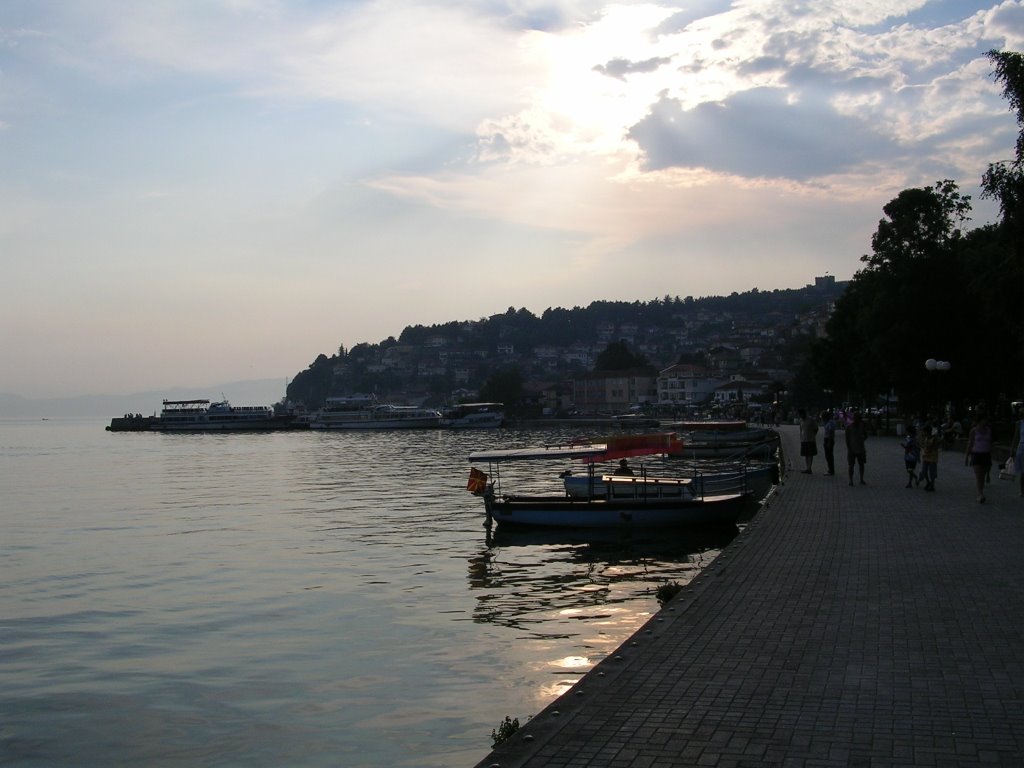
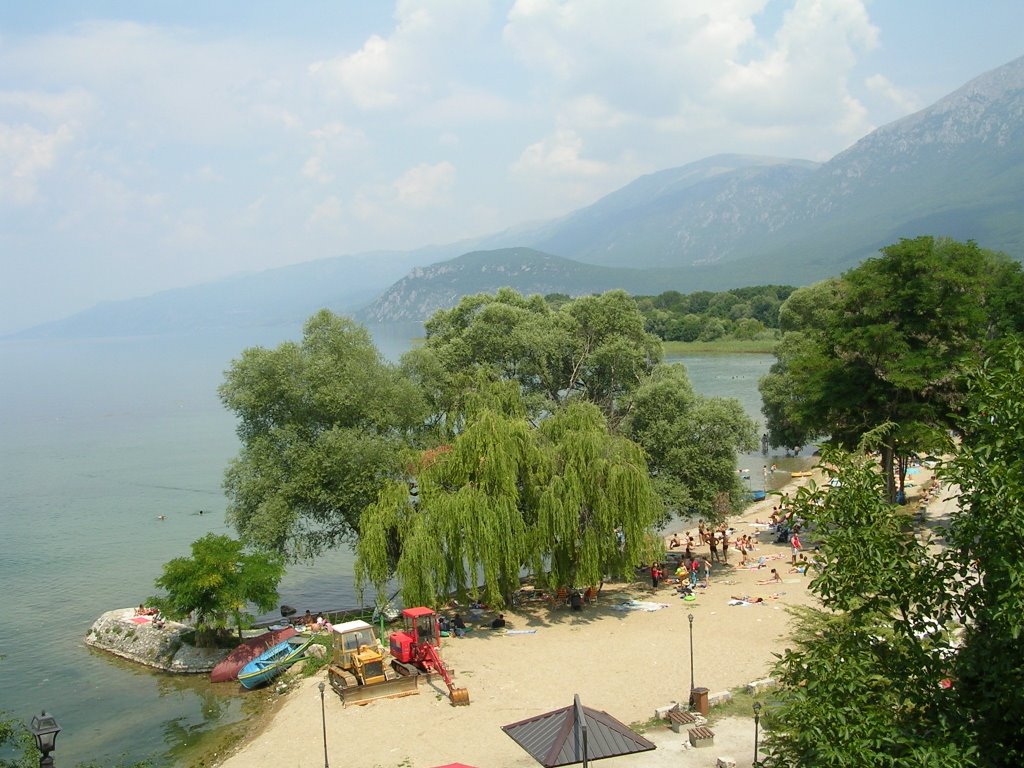
The following day we took an hour bus ride to the southwest corner of Lake Ohrid to one of Macedonia´s most famous churches, Sveti Naum. It is a beautiful area, bordered on one side by Lake Ohrid and on the other by a completely clear spring-fed lagoon. Dramatic mountains punctuate the backdrop. After having lunch at the monastary hotel, we decided to skip the next bus and check out the local national Park. Having had a good lunch we were feeling ambitious and decided we could walk the road up to one of scenic view points in the mountains. As with most of my excursion into the outdoors, the hike became a little epic; we spent the entire day hiking only to see the last bus going down the road while we were still a mile away. After standing around in the middle-of-nowhere Macedonia, in the dark, we started hiking to the next town. Luckily we managed to flag down a taxi headed back to Ohrid.

Tuesday, July 25, 2006

So, where are they now?

We took a train to Skopje, Macedonia two nights ago. We spent the morning in Skopje and were not impressed. It was hot (over 90, like everywhere else we’ve been lately) and the lodging situation didn’t look good. So we decided to catch the afternoon bus to Ohrid, where it would be cooler and we would have more room choices. Nice place so far.
I’ve put up a couple of posts from Belgrade that we did not have the opportunity to upload. Hopefully we will be able to post at least once more before we leave Ohrid.

On War

We also visited the Serbian National War museum which has one of the most amazing pre-WWII collections I have ever seen. It contains objects from the early conquests of the Ottomans and many rare weapons and pieces of armor from the middle ages. The museum is very plain and minimally maintained yet contains exhibits that the world’s great museums would kill for. The museum is also unapologetically nationalistic, which means it is less true history and more true to the Serbian mindset. While some people might be put off by this, I found it a very helpful window into the Serbian identity. However, the last exhibit is a little hard to stomach for me as an American, as it held the uniform of a captured US soldier and the flight suit and plane wreckage of a downed USAF pilot. The rest of the room was dedicated to the “war crimes” of other NATO members and of the other former Yugoslav republics (excluding Montenegro). Of course there was no mention of Srebrinica.


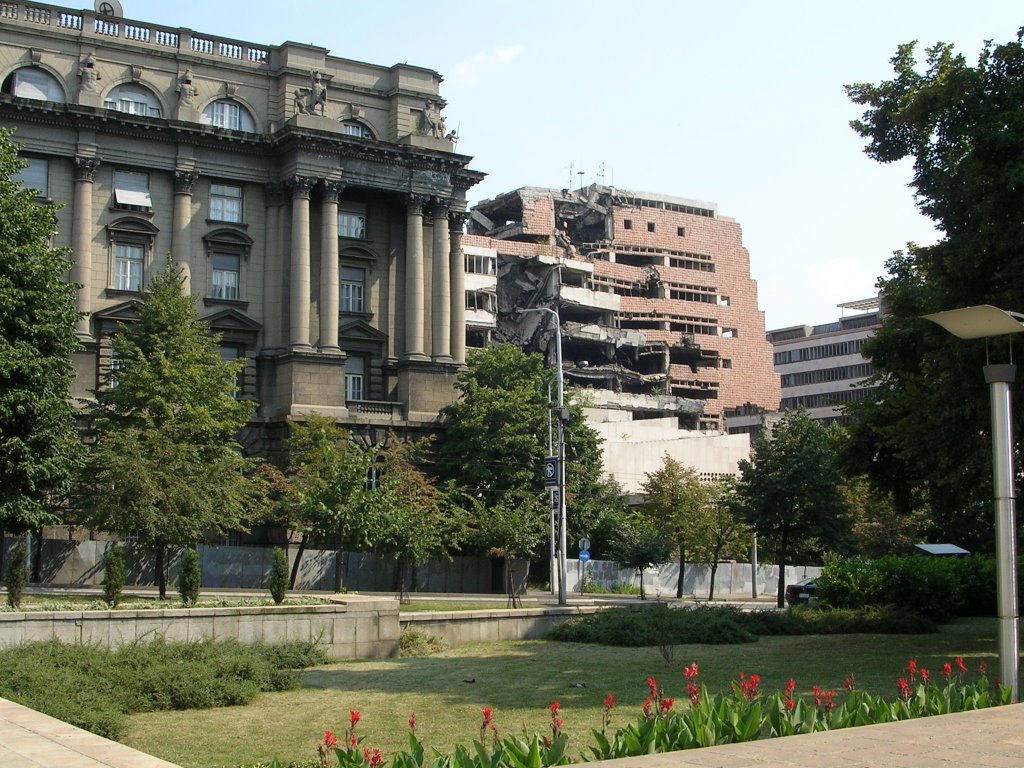
Am I bitter that the Serbs are displaying US service uniforms like they were Somalis dragging corpses around? No, not really. The people of Serbia, to lesser extent than the Bosnians, have been through hell in the last decade. The pain was mostly economic, as Milošević’s mismanagement of the economy led to record setting inflation. At its worst point, inflation of the Serbian Dinar reached 600,000% annually and 3% hourly (3% is a annual target rate for most countries). This resulted in the printing of bill with 11 zeros! (I’m looking for one of those on EBay when I get back). The NATO bombing campaign definitely destroyed some infrastructure but it is really more an issue of damaged pride and isolation from the west that Serbs cannot forgive.

Belgrade: A Second Look


We had a much better time in Belgrade this time around. We have decided that our affinity for a city is usually determined by our lodging situation. The Belgrade Eye was a vast improvement over our last experience at The Three Black Cats, which was an apartment the size of ours turned into a smoke-filled filthy hostel. The Belgrade Eye was clean, spacious, and staffed by professional and helpful people.

On our second visit I discovered Belgrade’s charm that I overlooked on my first pass.


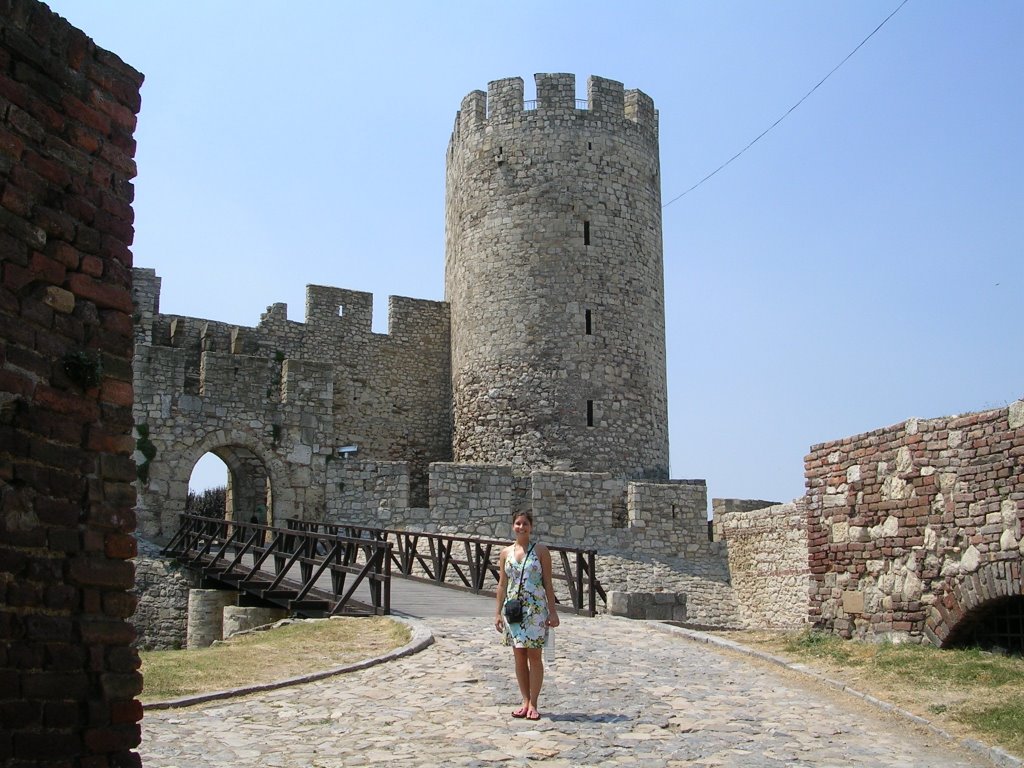
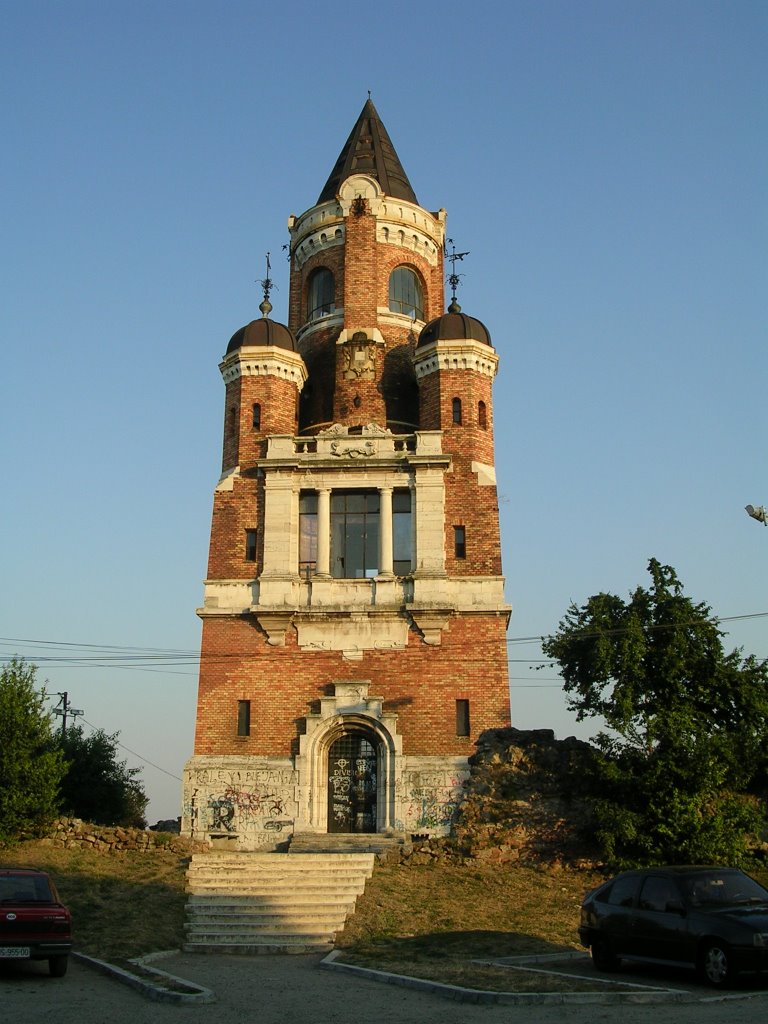
Kalemegdan is a massive layer cake of ancient fortresses on the bank of the Danube which has been ground zero for many dark pivotal events in history; Turkish Vizier Kara Mustapha was brought here to be strangled after he was defeated outside of Vienna and the first shots of World War I were fired at Kalemegdan from an Austrian battery on the opposite side of the river.


Zemun is located on the other side of the river and was once home to Belgrade’s Hapsburg overseers. The area still shows a stronger influence of Austrian architecture than central Belgrade.

Sunday, July 23, 2006

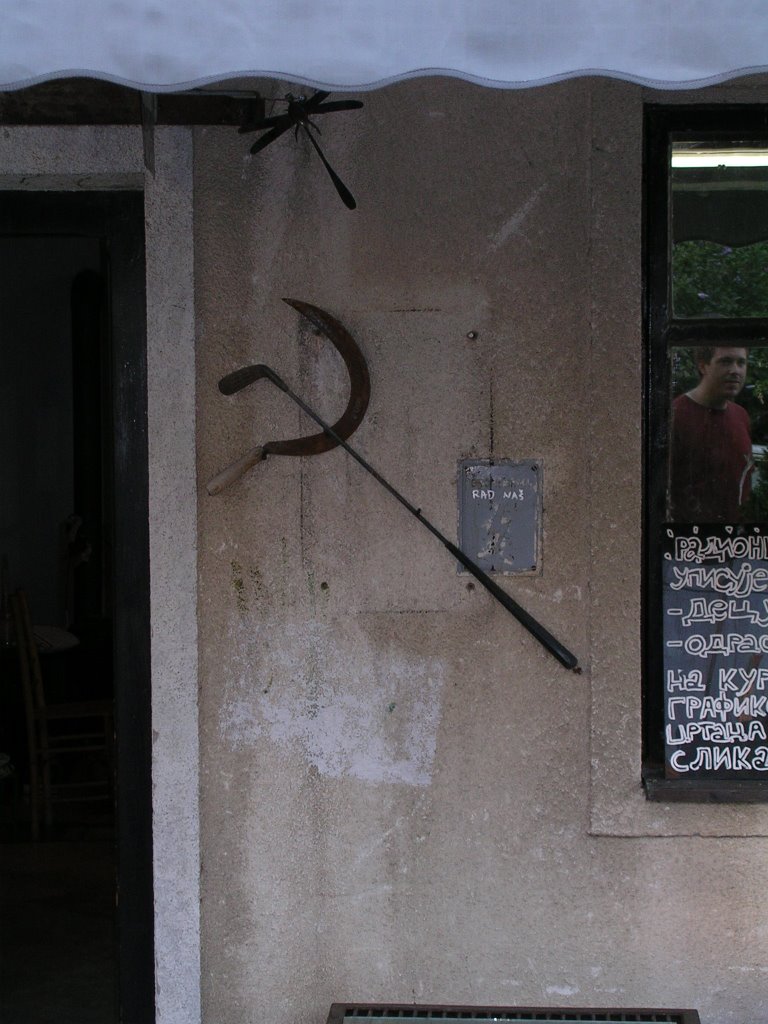
The path not chosen...

Buried in the suburbs of Belgrade I found the remnants of a little known branch of communism. If Lenin had scrapped the “workers revolution” in exchange for the “leisure sport revolution”, the world would be a very different place today. I know my dad and several of my friends would have converted.


Tuesday, July 18, 2006

Back in Ljubljana

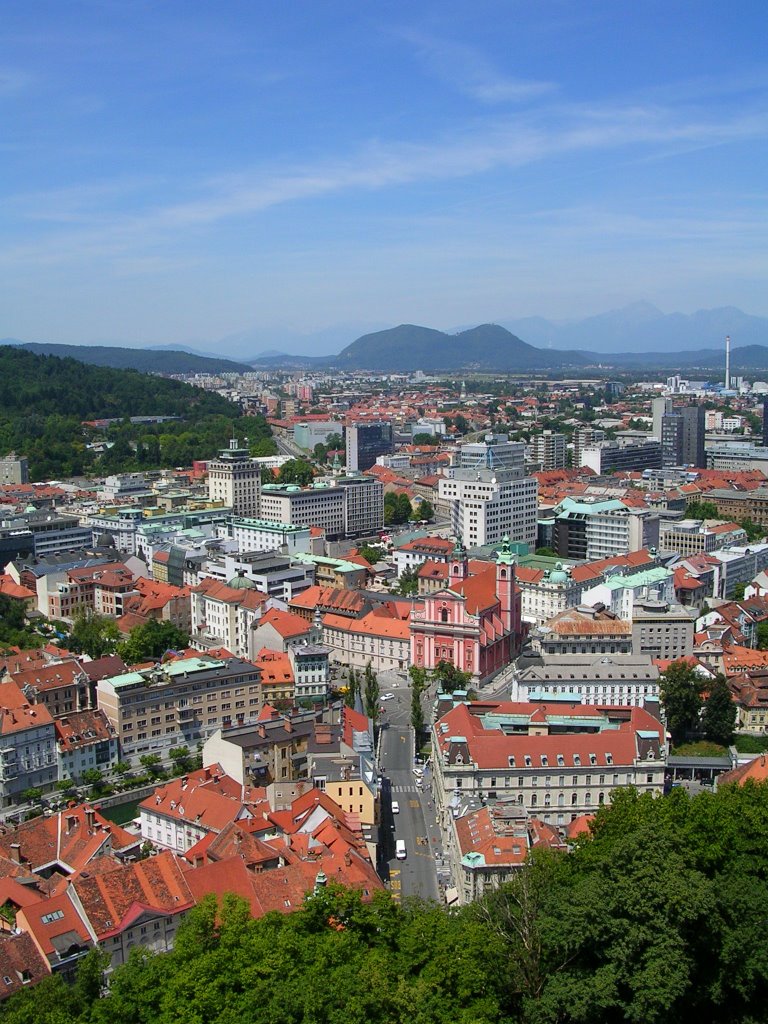
We are in Ljubljana, Slovenia and having a good time. Celica, our hostel, easily qualifies as the most unique and enjoyable of our lodging situations. It is a prison that has been converted into a hostel, art gallery, and restaurant. Rooms/Cells are reasonably priced and the food is an even better deal; for under $4 you can get a cheeseburger or chicken sandwich the size of your head. There is also live music every night. I'm using this down time to prep for some interviews in Belgrade later this week.

Milan


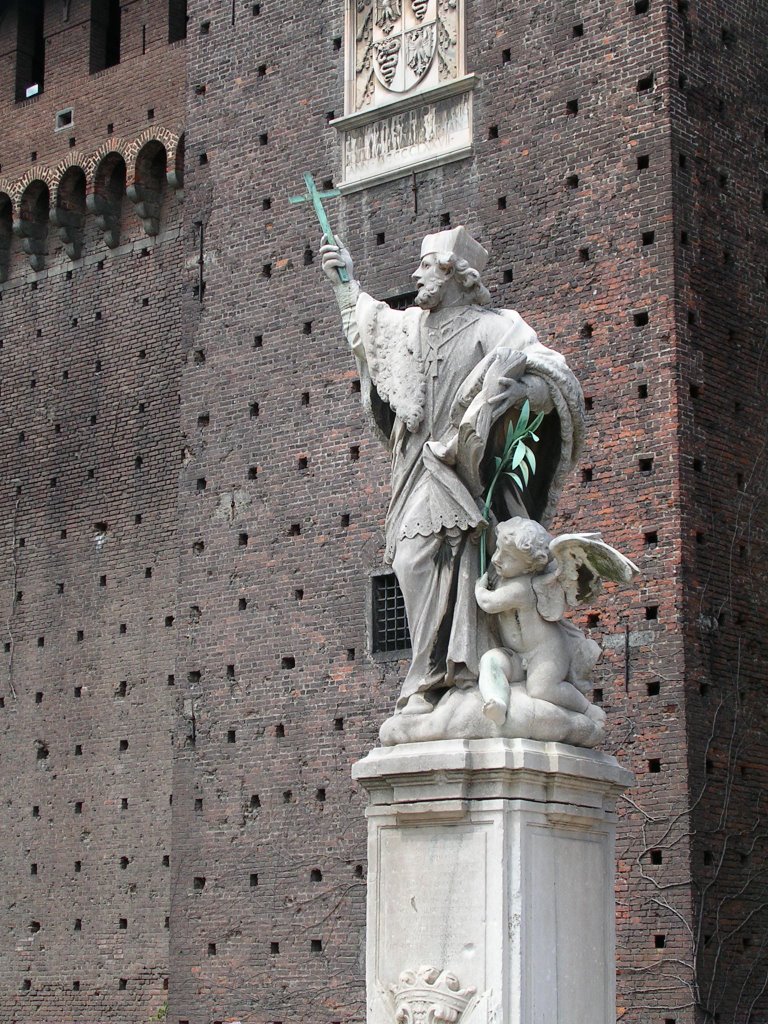
We took a night train from Bonn to Milan. We got some quality sleep and got to see quite a bit of the city. Milan has one of my favorite city parks of the trip!


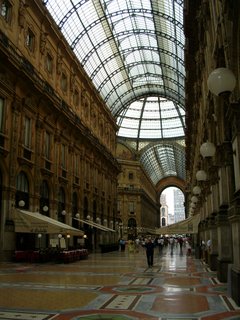
A big promenade in the old town.


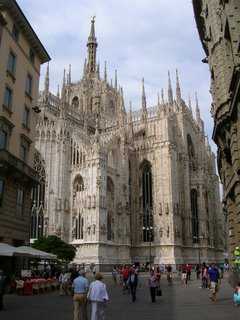
The 1,000th big cathederal I have seen on this trip.


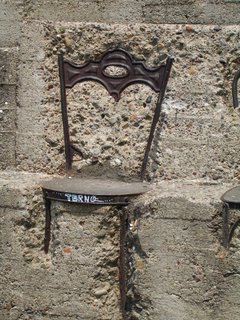
Some unique park furniture. You can tell when I have a good, cheap internet connection, can't you?

A few more TASA memories worth sharing...


Celebrating the 4th of July on a long bus ride. Jesse Cragwall pictured above, just making sure the non-Americans didn't forget what day it was.


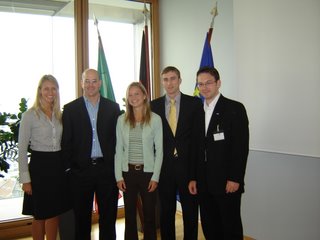
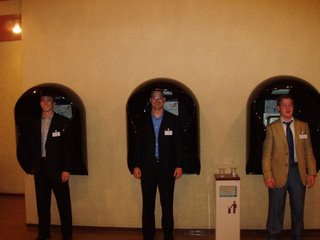
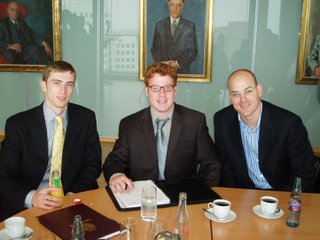
This is the UT Group. Fun Fact: The guy on the right once staged a mock crucifiction of himself to make street preachers in Knoxville mad. He says he wants to be a televangelist. Sigh....

Saturday, July 15, 2006

TASA ends


This post is dedicated to Tim and Jesse, without whom TASA would have been quite lame.

"Ludacris speed!!!" Spaceballs anyone? Anyone?

Sorry Tim.

Friday, July 14, 2006

It's the little things...

So I pushed the envelope of the language barrier and got a haircut; things did not go well.

Wednesday, July 12, 2006

Aachen


This is a picture of the inside of the Aachen Cathederal where Charlemagne's remains are held.

Sorry folks

There are a lot of posts and photos that I would like to add, but I don't have the time today. I'm planning on adding some photos from Trier to Erica's last post as soon as I get a chance.

Wednesday, July 05, 2006

Behind on the blogging...


I haven't had much time to blog about the day-to-day events of the TASA program, so I'm providing this link if you want a brief summary of the type of activities we are engaged in.

Also, I forgot to mention that we ran into 12 people from Knoxville in Strasbourg! They were in three different groups; one group was just some students visiting the city and the two others were there for the Tour de France.

Yes, I did...


The TASA group headed to Strasbourg today for a tour of the city and some other academic appointments. The city is really nice and historically interesting; however, I skipped out early because, by some lucky cosmic coincidence, the Tour de France was in town too! I found a spot inside the 1 kilometer mark and managed to snap a few photos. Watching a flat stage in person is anticlimactic, but it was awesome to be part of the energy that surrounds the race. To be honest, I’m not even sure who won the stage. I heard George Hincapie was in the lead, but I don't think he won the stage. By the time I made it down to the finish line they had already presented the yellow jersey.

We are staying at a hotel across the German border in Lautenbach, a small town in the Black Forest. It’s a nice little stereotypical German town; all the hotel workers are fat German girls with rosey cheeks and blond pigtails. Too funny. Strasbourg is pictured above.

Thursday, June 29, 2006

Visit to Stasi headquarters


On Wednesday afternoon we visited the former headquarters of the East German security service, or Stasi. Our tour guide was an author who grew up in East Germany and whose father was arrested and imprisoned for not following close enough to the communist party line. The name (I can’t remember his name) found great irony and deep satisfaction in touring American students through the office of the former Stasi chief. He made a lot of quotable comments. For instance: “There is no such thing as peace in a dictatorship. Peace in such a place is merely a state of undeclared war on the state’s population. Therefore we should not argue against intervention on the basis of peace.”

Another Berlin post


On Tuesday, we started off our day with a visit to the German Institute for International and Security Affairs (expressed as the German acronym SWP), a think tank for German security issues. SWP is, however, very different from the American “think tank” concept because it receives funding from the federal government. SWP also has, theoretically, a direct line of influence to government officials that is unheard of in the US model. Is this a good thing? In this case, definitely no, but it might well explain why German foreign policy is usually amateur hour. The SWP representative that spoke to us blasted US foreign policy (expected) and said that all of Europe’s terrorism threats were caused by the US led war in Iraq. What is so absurd about this comment is that, though it may contain some truth, it ignores the glaring fact that France, Germany, and the UK have been sitting on a volcanic chain of unassimilated Muslim populations for the past 20 years. The Iraq war did not create an underclass of Islamic outcasts in Western Europe, the cultures and policies of those countries did. Even so, if the presenter had simply stopped there I wouldn’t have wanted to beat my head to unconsciousness on the table. But of course he didn’t. When pressed on the issue of intercepting terrorists abroad he said, “Well of course countries can catch terrorists abroad, but murdering them is unacceptable…blowing up suspected terrorist with missiles in Yemen is simply wrong.” I find this concept more than a little difficult to wrap my mind around; this clown wants us to send a diplomatic envoy to a country that doesn’t exercise effective control over 60 percent of its territory in the hopes that it will dispatch its ineffective and corrupt police force to arrest an admitted enemy of our country? I can discuss different policy options and perspectives with many different people with different opinions and backgrounds while keeping and open mind, however, I have no use for someone that does not see the value in a well placed HellFire missile from a Predator drone. So I decided to keep these thoughts to myself and I slipped into an intellectual coma, safe and out of the reach of the relativist black hole that had formed between his ears.

Perhaps this story provides a good opportunity to segue to an email question I received a couple of weeks back; Barrett wanted to know about the European reaction to Zarqawi’s death. I honestly didn’t find out until several days later and was informed by someone in Croatia who said, “Well, I guess your country finally managed to murder Zarqawi, huh?” I responded with a deadpan response of, “Interesting”, not really interested in the provocation. I’ve heard a few similar comments, but not many. The general feeling is that it won’t accomplish much. My take: My ethical response is best summarized by a quote from French philosopher Simone de Beauvoir, “Vengeance is pointless, but certain men did not have a place in the world we sought to construct.” My strategic evaluation of the situation is that he is replaceable but I doubt his successor will be as eager to stick his neck out. I also think that his death makes the reconciliation between Shiites and Sunnis much more plausible.

The photo is from the visit to the Bundestag the previous day.

Chancellery and Reichstag


On Tuesday we visited the German Chancellery and the Reichstag. A point of clarification from my point yesterday: The German parliament is building is still called the Reichstag while the law making body is referred to as the Bundestag. Both buildings are in a much more contemporary style than government buildings in D.C. Touring the Chancellery was strange because unlike a White House west wing tour, we pretty much had the entire building to ourselves. Very modern, kind of boring.

Sunday, June 25, 2006

Missing photos from last post...


I think I've managed to find the worst internet connection in Germany...

So, what is it like being in Germany during the World Cup?

The atmosphere in Germany during the World Cup is not really comparable to any sporting event we have in the US. If you want a rough idea, I suggest you imagine what it would be like if the entire South Eastern US (about the population of Germany) only had one football team and it only played in a bowl game once every four years. We went to the main Berlin Fan Fest for the Argentina vs. Mexico game last night. We couldn’t go watch the Germany game there because there were 750,000 people in the square and the police were not allowing anyone else into that section of the city. People from all over the world are in Germany, not to attend the games (FIFA WC tickets are more illusive than a Golden Ticket to Willy Wonka’s chocolate factory), but just to watch them on a big screen with tens of thousands of screaming fans. The late game we showed up for was a lot calmer and only 300,000 to 400,000 packed into the square.

Me and two other guys left the game early and went up into the Bundestag (or Reichstag, as it was once known). This is the German parliament building that the Nazis burned to the ground to consolidate their grip on the government. When Germany was reunited and Berlin was restored as the national capital, a modern dome was added to the top to symbolize unity and hope for the future. In the pictures I had previously seen in magazines, the dome always seemed most beautiful at night, so I was insistent on visiting it then. We were not disappointed. On top of the Bundestag there is a wide open square from which to view the city and the dome. The dome itself has two long interlocking corkscrew ramps - one for up-bound traffic and one for down – that never intersect. This creates a mind-bending effect as you ascend to the top observatory. At the top the dome there is an open skylight and a circular bench on which you can lay down and gaze heavenward. I’m usually pretty uninspired by modern architecture, but given the history of the spot – once a gravesite of democracy and the point of cleavage between East and West – only a clear break with the past could convey Germany’s hope for the future.
We went on a bus tour of Germany today and saw some interesting things; however, I fell asleep and missed a lot of sites. After a month of traveling, it takes a lot more to get me excited than it did earlier on the trip. Tour guide: “And over here is the Holocaust monument…” Me: “Oh wow. I guess I should take a picture of it. By the way, is reason we haven’t eaten yet part of some Holocaust sympathy experience?”

Ever since visiting Sarajevo I’ve been thinking about how long it takes a city to recover from that level of destruction. Visiting Berlin is a clear warning not to be overly optimistic. There are quite a few buildings that are still tattered with bullet holes and if you look at the Greek Embassy on the West Berlin side, it looks like WWII ended yesterday, not 60 years ago.
We also visited the Berlin wall. The attached picture is of me and fellow UT student Jesse Cragwal on the East German side. And, it is possible that the two youths pictured above might be in possession of pieces of said wall. The Gipper told us to.

Friday, June 23, 2006

So, what exactly is Matt doing in Germany?

The Transatlantic Summer Academy (TASA) is a yearly summer program that focuses on a particular area of European – North American relations. This year the subject is terrorism and there are 24 students from 10 different countries. 14 of us are either Canadian or American, and the other 10 are mostly from Southeastern and Eastern Europe (Generally, the academy only invites members from non-European Union countries). The school, organized through the University of Bonn, is 3.5 weeks of intensive lectures, discussion, and travel pertaining to the philosophical, economic, political, and legal consequences and causes of terrorism. Our lecturers are all well known experts in their fields. In fact our first speaker, Paul Wilkinson, is something of legend in International Relations literature. We also take some equally impressive excursions, with visits scheduled for Berlin, NATO headquarters, and the European Parliament.

I’ve really enjoyed our group so far. The Americans and the Canadians initially gravitated to each other because we are all (either by national stereotype or coincidence of individual personalities) all loud, extroverted, and talk really fast. Half the fun of hanging out with the Canadians is making fun of them. Best Canadian joke so far: “Canada is like a quiet apartment over a really cool party.”

This year’s TASA is culturally diverse; we have 3 Muslims participants who have made our discussions very interesting. We also have a few odd-balls. For instance there is a girl from Illinois with, what sounds to me like a Persian accent, but she is a 100% homegrown American. When pressed about this fact, she told us that she developed an accent while studying abroad a few years back. Umm…okay…We’re pretty sure she’s an Al-Qaeda spy.